

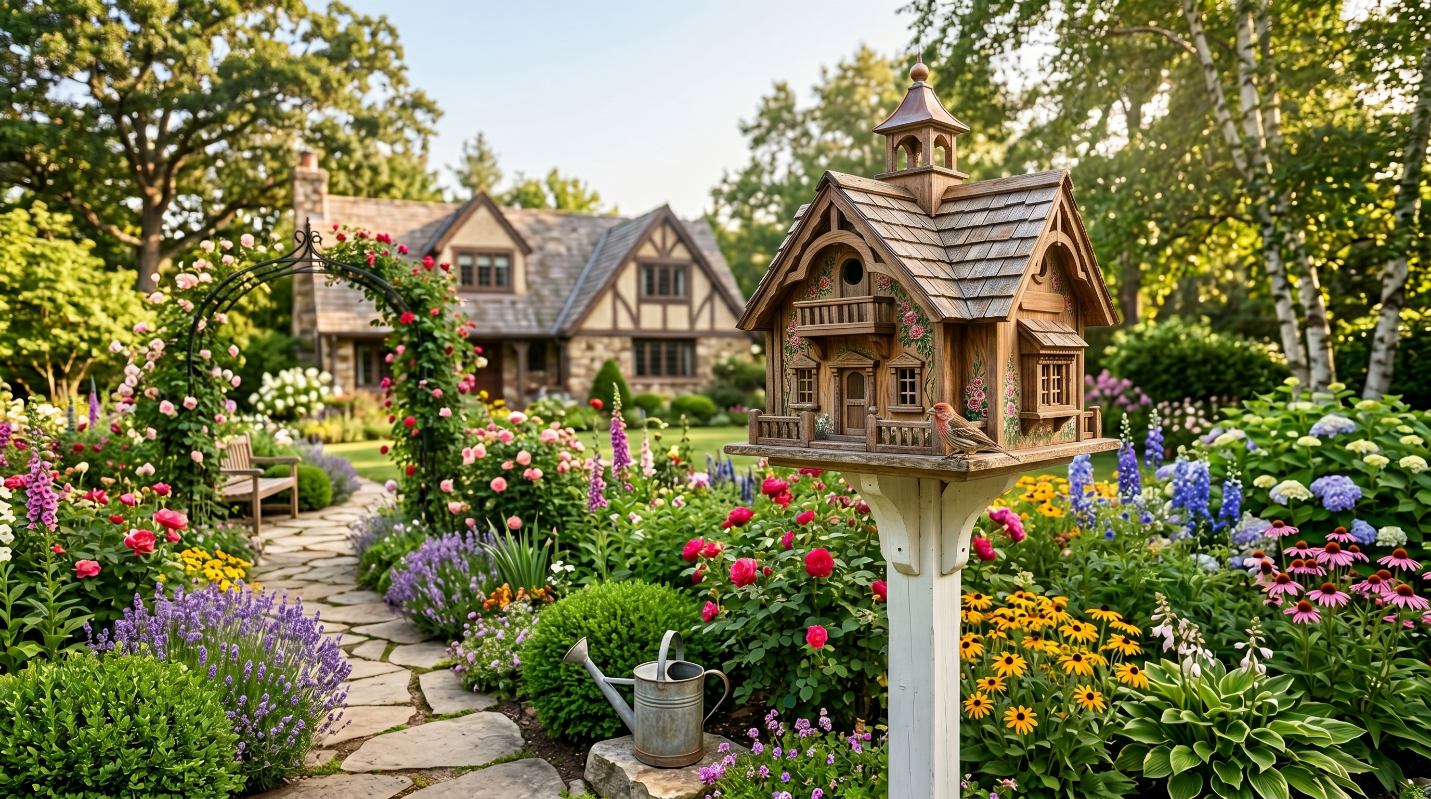
Hanging a few decorative bird houses is honestly one of the easiest ways to breathe fresh life into your outdoor space and completely transform its vibe. If you’ve been searching for a charming, budget-friendly way to upgrade your backyard or balcony, this is the perfect solution. Today’s designs have evolved way beyond those basic wooden boxes—they are genuinely beautiful pieces of outdoor art. Not only do they invite cheerful feathered friends to visit, but they also give your curb appeal an instant boost. Once you explore some of the unique styles out there and pick up a few practical placement tips, you’ll see just how effortlessly they can elevate your yard.
Why Decorative Bird Houses Benefit Your Landscape
Many home owners see birdhouses as only a utility for wildlife, but a good design can be a center point for your entire landscape design. It bridges the gap between man-made architecture and raw nature. In recent years, backyards have become true extensions of our living rooms, so outdoor styling is as important as interior decorating. Add a chic nesting box to your garden design and you instantly break the monotony of plain brickwork, bare walls and boring wooden fences. You create a moving backdrop, where a mere burst of colour or a rough-hewn wooden structure set against verdant foliage draws the eye and makes the space feel complete.
Popular Design Aesthetics For Modern Yards
The right aesthetic is entirely dependent on the vibe of your property, from whimsical cottagecore to modern minimalist. A cottage design with hand-painted flowers, fake stone chimneys, and tiny window shutters is ideal for a garden full of wild, overflowing flower beds, climbing ivy, or meandering stone paths. On the flip side, geometric birdhouses with clean lines, monochromatic palettes such as matte black, and unusual shapes like cylinders or asymmetric cubes look incredibly sophisticated on contemporary properties with clean architectural lines. Rustic farmhouse designs are a time-tested aesthetic, straight out of the box with weathered barn wood and corrugated tin sheets that give a timeless, lived-in look. Or large multi-tiered Victorian mansion birdhouses make fabulous focal points when securely mounted right in the middle of a manicured lawn.
Strategic Placement For Safety And Visibility
Where you place your decorative bird house is important, not only for your view but for the safety of the birds. Most small nesting birds like houses mounted 5 to 12 feet off the ground. If a house is hung too low, it’s an easy target for neighbourhood cats, raccoons and strays predators. If it’s hung too high, it’s completely invisible to people relaxing on the patio. “Make sure that the mounting bracket or pole is completely sturdy and will not swing wildly in high winds, so your garden art remains a safe, stable feature.”
Amateur decorators tend to overlook other factors such as weather orientation and foot traffic. In most areas, fierce winds and driving rain storms come from the north or west, so always point the entrance hole of your birdhouse south or east. This clever arrangement keeps the inside dry and lets the soft morning sun gently warm the space up without overheating the delicate hatchlings on blistering summer afternoons. Additionally, try to avoid placing the house near high-traffic intersections like a noisy patio door or an outdoor speaker setup, as constant human disruption will scare birds away entirely.
Balancing Visual Appeal With Real Functionality
One of the biggest mistakes in garden design is buying a decorative piece that looks fabulous but is utterly unlivable for real birds. The function and the aesthetics have to be balanced, and this means a thorough consideration of the structural measurements before purchasing. The size of the entry hole must be exact for example, if the opening is too big then larger predator birds such as starlings or crows will get inside and wreck nests. The ideal size opening for most friendly backyard songbirds is 1.25 inches to 1.5 inches. Also, you want to avoid designs that have a little wooden peg or perch just below the door. Real birds don’t need this to get into the hole, but predators use it as a handle to hang on to while raiding the nest inside.
Interior comfort is just as important as exterior beauty, meaning true bird-friendly designs must have subtle ventilation and drainage gaps built seamlessly into the structure. Check for tiny air gaps near the roofline to allow hot air to escape during the hottest parts of summer, and small drainage holes drilled in the floor to prevent accidental rainwater from pooling and causing mould. If a decorative piece does not have these features, you can easily drill a few small holes yourself prior to installation, so your garden art is a safe haven not an environmental hazard.
Essential Seasonal Maintenance And Care
We highly recommend implementing a simple seasonal maintenance routine to ensure your investment continues to look fresh and perform well for years to come. The outdoor decor takes a beating from intense sun, drenching rain and winter frost. You may want to spray only the outside of a hand-painted birdhouse or one made from raw wood with a clear, non-toxic, water-based polyurethane sealant to help keep the artwork from fading. Do not paint, stain or seal the inside of the nest box where birds sleep and lay their eggs. The fumes from the chemicals can be very toxic to birds.
Conclusion
Lastly, don’t forget the importance of an annual autumn cleanout as the seasons change. Unscrew the access panel or cleanout door at the end of each breeding season and remove old nesting material, twigs and feathers to prevent parasites and dampness from ruining the wood. If you live in an area that gets hit with serious winter blizzards or heavy ice storms, a good idea is to unhook your very delicate, hand-painted decorative pieces and store them in the shed or garage until spring. Paying attention to these small details will ensure your decorative bird houses will continue to add to the style of your property and bring the happy sounds of nature to your doorstep year after year.
FAQ’S :
Do Real Birds Actually Build Nests Inside Decorative Bird Houses?
Yes, absolutely. As long as the birdhouse features proper ventilation, floor drainage, and a correctly sized entry hole, wild songbirds will gladly use a decorative house as a real home.
What Is The Ideal Entry Hole Size For A Decorative Birdhouse?
The entrance hole should be between 1.25 and 1.5 inches in diameter. This size is perfect for inviting friendly backyard songbirds while successfully blocking out larger predator birds.
Should A Decorative Birdhouse Have A Wooden Perch Peg Under The Door?
No, it is actually safer to avoid front perches. Nesting birds do not need a perch to enter the hole, but predators like cats and larger birds will use it as a handle to raid the nest.
How High Off The Ground Should I Install My Decorative Birdhouse?
You should mount or hang the structure between 5 to 12 feet high. This range keeps the birds perfectly safe from ground predators like cats while keeping the beautiful design visible to your family.
Can I Paint Or Varnish The Inside Of A Decorative Bird House?
No, you should only paint or seal the outside of the structure. The inside must remain raw, natural wood because chemical fumes from paints and sealants can be highly toxic to small hatchlings.
Want to explore more? Check out other articles on our site.
Disclaimer:
The home decor ideas, DIY projects, and landscaping suggestions shared on this website are intended solely for inspirational and general informational purposes. While we strive to provide creative and practical advice, any modifications, installations, or craft projects you undertake on your property are done strictly at your own risk. We are not liable for any property damage, personal injury, or financial loss resulting from the use of tools, materials, or improper mounting of fixtures mentioned in our content. Additionally, because wildlife behavior is naturally unpredictable, we cannot guarantee that birds or other wildlife will interact with or nest in any specific setup. Always prioritize safety and consult local professional guidelines when handling construction or outdoor installation tasks.